Parents tend to remember the weekend parties that ran smoothly, where the kids burned off energy and the adults could chat without glancing at the clock every minute. A well planned bounce house rental can do that. Inflatable play structures are more than colorful backdrops. They are a center of gravity, drawing kids into safe, repeatable fun so the rest of your gathering can breathe. After years of setting up and supervising inflatable bounce houses at birthdays, school fairs, and neighborhood block parties, I have a running list of what makes the difference between a stress-free rental and a scramble. The details are not glamorous, but they pay off.
Start with the party you want, not the unit you saw online
Scrolling pages of inflatable rentals is tempting. Princess castles in every hue, combo bounce house rentals with slides and basketball hoops, huge inflatable slide rentals that look like a theme park. Before you fall in love with a photo, map your constraints in the real world.
Think about your guest list and their ages. A toddler bounce house carries different height and weight limits than a unit designed for eight-year-olds. Mixed ages require a strategy: either book separate party inflatables suited to each group or plan time blocks where older kids step back. I have run parties where we alternated 15 minute rotations by age and the unit stayed in great shape, the toddlers had a blast, and parents could relax.
Measure your space, and do not rely on memory. Take a tape measure to the backyard or driveway and get length, width, and the unobstructed height under trees, eaves, or power lines. Most inflatable bounce houses need a footprint of roughly 13 by 13 feet for smaller models and up to 20 by 20 feet for combo units. Slides and bounce house and water slide rentals stretch longer, often 25 to 35 feet. Add at least 5 feet of clearance on all sides for safe entry, exiting, and the anchoring system.
Surface matters more than it appears. Grass is ideal for stakes, safe landings, and cooler surfaces. Concrete and asphalt get hot, especially in summer. If you must place on hard ground, ask for tarps and sandbags, and consider shade or a misting fan. Avoid slopes. Even a gentle grade can make kids bunch up and tumble toward one side. If the lawn is lumpy, note where sprinkler heads and utility covers are located. Crews can work around them with padding if they know ahead of time.
Noise tolerance is another overlooked factor. Blowers that keep inflatable party equipment pressurized run continuously. A typical 1 to 2 horsepower blower sounds like a strong shop vacuum. Position it behind fencing or landscaping if you want to preserve conversation areas.
Booking smart: timing, inventory, and weather windows
Weekend bounce house rental slots book out fast during spring and early fall. If your date sits near a school break, graduation season, or a major holiday, consider reserving four to six weeks ahead. That extra lead time broadens your options for specific themes and sizes, especially if you want a combo unit or a popular water slide.
Weekends follow predictable rhythms. Morning deliveries start early, but the first wave sometimes stretches when a previous customer was late to open the gate or the crew hit traffic. If your party starts at 11 a.m., ask for a delivery window that ends by 10 a.m., not 10:45, and confirm that buffer in writing. For pickup, most companies default to evening or the next morning. If you want the unit down before dark or you are concerned about overnight noise, mention it at booking. A clear upcharge is common for exact pickup times.
Weather can make or break an inflatable rental. Most reputable party rentals treat steady rain, high winds, and lightning as hard stops. Wind is the key risk. The majority of inflatable rentals have a safe operating limit around 15 to 20 miles per hour; gusts above that can push a unit even if it is well staked. Get a weather clause in your contract. A good policy offers a no-fee reschedule or credit if the forecast is unsafe. Resist the urge to run a unit in questionable conditions. I have seen calm mornings turn gusty in thirty minutes, and the unwinding effort erases any fun.
Safety first without scaring the fun away
A safe party becomes a fun party. The basics sound obvious until real kids and real excitement collide.
Check the rental company’s safety practices. Look for current insurance, training on setup and anchoring, and clean, well maintained children’s party equipment. Ask how they sanitize between events. For high turnover seasons, I prefer companies that use checklists for inspection on arrival and departure. You can tell when a crew has a real process.
Placement is your first control point. Keep the inflatable at least 15 feet from pools, barbecues, fire pits, and overhead lines. Keep entrances visible from where adults will gather. If you have dogs, plan to keep them away from the setup and party areas.
Shoes off, always. It keeps the bounce surface clean and reduces toe scrapes and trips. No food, no drinks, no gum. Sunglasses and hats seem harmless but scratch vinyl in seconds and create sharp points in falls. Jewelry and badges should come off. Face paint is a judgment call. Oil based paints transfer to vinyl and stain; if a theme requires painted faces, opt for water based products and ask kids to wipe before they bounce.
Set capacity rules that match the unit’s specs. Rentals typically list maximum users and weight limits. For a standard 13 by 13 bouncy house rental, the practical range is six to eight small children or four to five older kids. Combo bounce house rentals with slides push capacity higher but also create choke points at the slide ladder. Stagger the slide users and bounce users to avoid bottlenecks. Mixed age groups are where injuries happen. Keep older kids out during toddler time.
Assign a spotter. One adult stationed by the entrance can do wonders. They are not a lifeguard, but they can cue kids to wait their turn, keep the zipper door closed during use, and stop rough play. In my experience, the spotter job is easiest for a parent who knows most of the kids and can name them without hesitation.
Power safety matters more than most hosts expect. Each blower needs its own circuit. A 15 amp household circuit handles a single 1 to 1.5 horsepower blower, but adding a second blower, a popcorn machine, and a DJ setup can trip a breaker right as your party hits stride. If you are running two or more blowers, split them across different outlets that feed separate breakers. Avoid daisy chained extension cords. Use one heavy duty outdoor rated cord per blower, 12 or 14 gauge, with grounded plugs. Keep cords taped down or routed along fences to prevent tripping.
Choosing the right unit for your crowd and space
A few broad categories cover most event rentals for kids.
Moonwalk rentals, also called classic bounce houses, emphasize open jumping. They fit small yards and budgets and work well for ages 3 to 10. If you have a modest guest list or a mixed activity plan that includes crafts or yard games, a classic moonwalk gives you flexibility without dominating the event.
Combo units add a slide, a small climb, and often features like a basketball hoop or pop up obstacles. They fill a 20 by 20 footprint or larger and draw older kids for longer. They also move lines along at a predictable pace. In my experience, if you have 12 to 20 children between ages 5 and 9, a combo balances chaos and throughput.
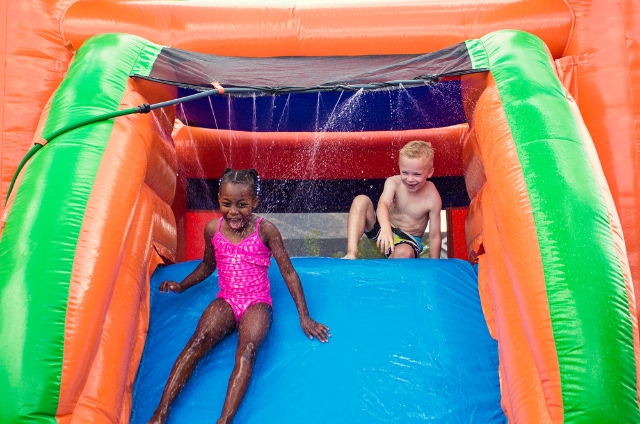
Inflatable slide rentals come dry or wet. Dry slides are popular for school events and neighborhood gatherings where you want high capacity, short rides, and quick resets. Water slides dominate summer backyard party rentals. They require a garden hose, a long tarp runway, and a plan for runoff. Water on grass is fine for a day, but too many hours will turn the landing zone to mud. If you choose bounce house and water slide rentals, set up early so the ground can handle the flow, and relocate a sprinkler head if necessary.
Toddler bounce houses are smaller, softer, and have more open sightlines. They often include low profile obstacles and a short slide, perfect for ages 2 to 5. If your party skews young, renting a dedicated toddler bounce house keeps them away from the bigger kids and reduces collisions.
Themed units often cost a bit more and book out earlier. Ask yourself whether the graphics support the party or just inflate the price. Kids care about size and novelty more than character art, especially after the first five minutes.
The boring but vital paperwork
Good party rentals companies present transparent contracts. Read them. Confirm the total cost, sales tax if applicable, delivery and pickup windows, setup location, and any stairs or gates the crew must navigate. Note the cleaning expectations. Most companies expect a unit to come back free of food, glitter, and taped decorations. Confetti inside a bounce house is a cleaning nightmare. If you want to do a confetti popper, keep it far from the inflatable.
Deposits are normal, often 20 to 40 percent. Cancellation policies vary. Many allow free rescheduling for weather, but treat customer choice cancellations differently. Confirm whether a refund is possible or if you get a credit for future inflatable rentals.
Ask for proof of insurance if you are hosting at a public park, school, or HOA common area. Many venues require a certificate of insurance naming them as additionally insured for the date. That can take a day to issue, so do not leave it to the week of the party.
Site prep: how to avoid day-of surprises
Walk your space a day or two in advance. Mow the grass short to keep debris from blowing into the unit. Remove pet waste. Check for ant hills or bee activity. Move patio furniture, grills, and planters out of the footprint and clearance zones. Unlock gates and clear the path from the driveway, because the rolled inflatable is heavy and wide, often 3 to 4 feet in diameter and 200 to 400 pounds. Crews use dollies, but tight corners and steps slow everything down.
Power plan in detail. Locate the outlets and test them with a phone charger to verify they are live. If the outlet is on a GFCI circuit, press reset to ensure it is not tripped. If your panel is old or you have frequent trips, consider using separate exterior outlets on different sides of the house. I have saved more than one party by running a cord to the garage on its own breaker.
Shade helps. Even if the inflatable sits in the sun, shade for the line keeps kids calm. A pop up canopy or tree cover does the trick. If the weather is hot, place a cooler of water near the entrance and encourage breaks.
If you are using water features, lay down an extra tarp and a few foam tiles at the exit to reduce mud. Plan a shoe station with a simple bench and a bucket for flip flops. It keeps the area tidy and prevents the lost-shoe scavenger hunt.
Delivery day rhythm and setup tips
Expect a two person crew for most inflatable bounce houses and a larger crew for giant slides. A typical setup takes 20 to 45 minutes depending on distance from the truck, surface, staking, and whether power is in place. Be ready to choose the final position. A few feet either way can change shade patterns and cord paths.
Watch the anchoring, because it is the backbone of safety. On grass, crews use long steel stakes at each tether point, often 18 inches or more, hammered at an angle. On concrete, they use sandbags or water weights, and sometimes a combination with strapping. If the unit looks like it can shift under side load, ask for additional weights. You are not being fussy. You are doing your job as host.
Once the unit is inflated, walk the seams. Light stitching marks are normal, and small air seepage at the seams is expected; that is how the structure maintains equal pressure. What is not normal are torn seams, duct tape repairs, or loose zippers. If you see an open zipper that vents air, ask the crew to secure it. They should also stake or weight the blower tube to prevent it from slipping.
Take photos of the unit at setup for your records, especially if the company holds you responsible for damage. These photos also help you rebuild the layout next time when you realize the sun clears the tall maple at 1 p.m.
Rules that kids will actually follow
You could print a wall of rules. Kids would glance once and sprint past. Keep it simple and repeatable. Explain it during the first bounce line and remind kids every so often.
- Shoes off, pockets empty, no gum or food inside. If you bring it in, you hand it to the spotter first. Wait until the door closes before you enter, and count to three between jumpers on the slide. No flips or roughhousing; if someone falls down, everyone freezes for three seconds to let them stand up.
Three rules, said with a smile, sink in. The freeze rule works better than you think. Kids love an excuse to freeze and then bounce again on cue. It prevents the pileups that lead to ankle twists.
Managing flow with mixed ages and bigger crowds
For kids party rentals serving 20 or more children, plan structure around peak times. The first hour after lunch and the last hour before cake tend to be the busiest. If you have a wide age range, enforce rotations. Younger kids first for ten to fifteen minutes, then older kids, then mixed. You will hear a little groaning the first time, and then it falls into a rhythm. Parents appreciate it.
If you add a second unit, do it with intent. Pair a toddler bounce house with a larger combo for separation, or pair a classic moonwalk with a dry slide for throughput. Two similar units split attention and double supervision needs without solving any capacity problems.
Music helps manage energy. Upbeat but not frenetic playlists keep the noise cheerful without driving kids into hyperdrive. I have had good luck placing a speaker across from the entrance, set to a steady volume, so kids returning from the slide ladder hear the same cue as the ones lining up to bounce.
Food, drinks, and the dirt problem
Snacks and sugar will find their way toward the inflatable. Put your food tables upwind and at least 20 feet away. Offer cups with lids for younger kids, not open cans or sticky juice boxes. Place a small trash bin near the shoe station. Most of the mess happens within a few feet of the entry tunnel, and a bin there catches it.
For summer parties with water slides, think about grass clippings. Freshly cut lawns stick to wet feet and end up inside the unit, grinding into the vinyl. If you must mow the day of, blow the area thoroughly and wait for dew to evaporate.
Glitter. Avoid it. If you must have sparkle, use oversized confetti only in the photo area, not near the bounce house. Rental companies charge cleaning fees for glitter and confetti in the unit, and they are not exaggerating the effort required to get it out.
Weather pivots you can live with
Every host needs a plan B, even in pleasant months. Light rain is manageable with dry units if you pause and towel the surface. Vinyl becomes slick when wet; a quick dry and some patience brings it back to normal. For heavy rain or gusty winds, be ready to pivot activities inside. Keep a small craft or game station on standby, and a simple prize grab keeps spirits up. If you have a canopy, moving the shoe station and entrance under cover buys you time during brief showers.
When storms threaten but do not arrive, err on the safe side. Two short shutdowns over the course of an afternoon are better than one close call. Kids handle interruptions well when you frame them as a countdown challenge. I have done 10 minute safe breaks where everyone grabbed a drink, then we reopened with a big cheer.
Aftercare: teardown and what happens next
Pickups after dark are common in summer. Keep the area lit and clear. Ask the crew if they need the blower left running until they arrive; most do, since deflation creates awkward folds if left too long without supervision. Once they shut off power, the unit collapses quickly. Keep kids and pets back while the crew rolls and straps the vinyl, because fingers can get caught in folds.
Do a walkthrough for any personal items that slipped into corners. I once found a favorite stuffed animal wedged behind the landing pad 24 hours later. Check for small cuts or scuffs on the grass. Normal use will leave a rectangle of flattened turf that springs back in a day or two. Heavier water slide use may leave soft spots. Rake lightly after everything is loaded to fluff the blades.
If anything felt off with the experience, mention it to the company within a day. Most reputable operators appreciate feedback, especially if a seam showed wear or a zipper stuck. They want the unit in top shape for the next rental, and you jump house rental prices can often secure a discount for your next booking by being a thoughtful, specific customer.
Budget ranges and where to spend
Prices vary by city and season, but some ranges hold. Classic inflatable bounce houses often run 120 to 220 dollars for a day, sometimes a touch more on weekends. Combo bounce units sit between 200 and 350 dollars. Inflatable slide rentals span 250 to 500 dollars for dry units and 350 to 700 for water slides, depending on height and length. Delivery distance, stairs, and exact time windows can add fees. Extra day rates tend to discount heavily, so if you want the unit for Saturday and Sunday, ask about a weekend rate.
If you have room to spend in one place, invest in the right size and style of unit, then in shade or cooling if heat is an issue. Skip paid themes unless your child is ecstatic about one. Allocate a little budget to a second staffer or a teenage helper to spot. That small spend simplifies your day and keeps the unit safer.
Common pitfalls and easy fixes
Too few adults minding the entrance leads to rough play. Solve it by assigning shifts. Five families taking 15 minutes each across two hours covers the peak easily.
Power overload trips breakers right as kids get excited. Map circuits and separate the blowers. Keep a flashlight near the panel that day.
Late setup compresses your timeline. Book an arrival window that ends at least an hour before guests. Text the crew a photo of the gate and the anchoring area the day prior to reduce surprises.
Overcrowding causes skinned knees more than anything else. Use clear capacity rules and rotations, and consider a second unit if your guest count crosses 20 kids for more than two hours.
Water without a runoff plan turns the yard muddy. Lay tarps, reposition the landing after an hour, and pause water flow intermittently.
A simple day-of checklist for hosts
- Confirm power, outlets, and extension cords; test with a small device before the crew arrives. Walk the footprint and clearance zones, removing hazards and marking sprinkler heads with flags or cups. Set up a shoe station with a bench, small trash bin, and hand wipes near the entrance. Assign an adult spotter schedule, and brief them on the three rules and emergency stop. Keep towels, a basic first aid kit, and a roll of painter’s tape for cord management within reach.
When to consider add-ons or alternatives
Not every yard or party suits a single giant inflatable. If your space is tight or your crowd is older, think in clusters. A classic moonwalk paired with lawn games like cornhole and a small obstacle tunnel spreads kids out. For very young parties, a toddler bounce house with a soft play zone creates a safer environment and keeps stress low for parents.
If heat is the biggest concern, bounce house and water slide rentals change the energy of the day. Just budget for wet grass, towels, and a few more trips through the house. If sound is a concern or your HOA has strict hours, a dry combo with a shaded rest area and popsicles delivers smiles without extra noise.
For school or community events, consider high throughput units. A tall dry slide with two lanes moves lines twice as fast as a single entrance bounce house. Rotating kids through stations also keeps each area from overloading. Event rentals for kids at that scale benefit from cones, rope lines, and clear signage. Kids read signs when they are short and simple.
The quiet art of a good bounce house party
The magic of a successful weekend bounce house rental lives in the small things. A clear path to the entrance. A calm adult who can call a quick pause. A size and style that matches the kids in front of you, not the one you saw in a catalog. When it clicks, the inflatable becomes a backdrop for the best kind of commotion, the kind that warms a backyard and leaves everyone pleasantly tired.
I have watched cautious three year olds inch onto a toddler bounce house and leave an hour later with windblown hair and the first hint of confidence. I have seen nine year olds build impromptu slide races with fairness rules of their own. The equipment, whether you call it bounce house rentals, moonwalk rentals, or party entertainment rentals, is just a tool. The planning makes it work.
If you cover the basics, you can relax. Keep an eye on the weather, anchor the unit properly, mind the power, and set simple rules. Everything else is just laughter in the yard and a stack of shoes by the door.